

“Down these mean streets a man must go who is not himself mean, who is neither tarnished nor afraid. He is the hero; he is everything. He must be a complete man and a common man and yet an unusual man. He must be, to use a rather weathered phrase, a man of honor—by instinct, by inevitability, without thought of it, and certainly without saying it. He must be the best man in his world and a good enough man for any world.
“He will take no man’s money dishonestly and no man’s insolence without a due and dispassionate revenge. He is a lonely man and his pride is that you will treat him as a proud man or be very sorry you ever saw him.
“The story is this man’s adventure in search of a hidden truth, and it would be no adventure if it did not happen to a man fit for adventure. If there were enough like him, the world would be a very safe place to live in, without becoming too dull to be worth living in.” ― Raymond Chandler, The Simple Art of Murder
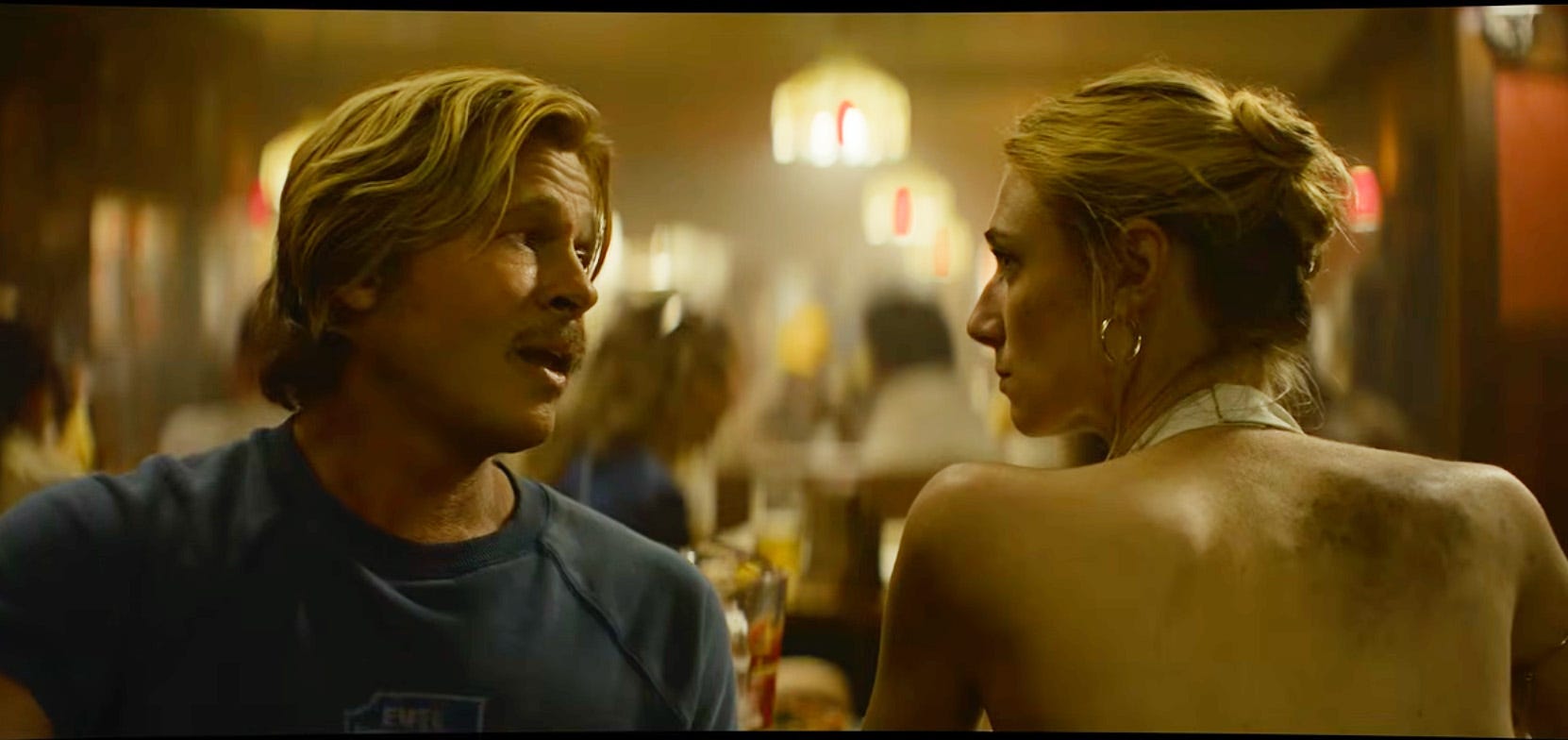
For so many of us, 2019 was the last normal year and one of the best years for American film. It was the moment before the ship hit the iceberg and sent us plunging beneath the water’s surface, unable to come up for air for years. COVID hit, then lockdowns, then the protests and riots of a “Great Awokening” revolution. Then January 6th, then more lockdowns, more paranoia, more division, and before long Hollywood had become crippled amid a culture of silence and a climate of fear.
But now, David Fincher and Quentin Tarantino’s collaboration has brought Hollywood roaring back to life, albeit with noticeable battle scars. The Cliff Booth of Once Upon a Time in Hollywood is like 2019. The Cliff Booth in this film is more like 2026, where there is no denying what we just lived through and why there is still darkness on the edge of town.
Cliff Booth in Once Upon a Time in Hollywood wasn’t the guy you’d want on a movie set. He wasn’t a guy you’d want to marry. But he was the only guy you needed when it came to kicking the shit out of the Manson Family. Oh, what a relief it was to watch Cliff Booth be in the right time and place to spare a pregnant Sharon Tate and her houseguests from an infamous, bloody, unthinkable murder.
Obliterating the Nazis before they murdered six million Jews, a slave’s bloody revenge, and stopping the Manson murders were the ways Quentin Tarantino decided to remake history for high entertainment and some kind of satisfying conclusion to what still torments us over time.
But what was going on in 1977, other than Star Wars topping the box office and Jimmy Carter’s inauguration? Not much. Braless women had zipless fucks in the bathrooms at discos. Harvey Milk was leading a new movement for gay rights, but the bathhouses raged on. In the post-Black Power, post-Women’s Rights, post-Vietnam War years, America wasn’t exactly on edge. And topping the charts was Rod Stewart’s “Tonight’s the Night.”
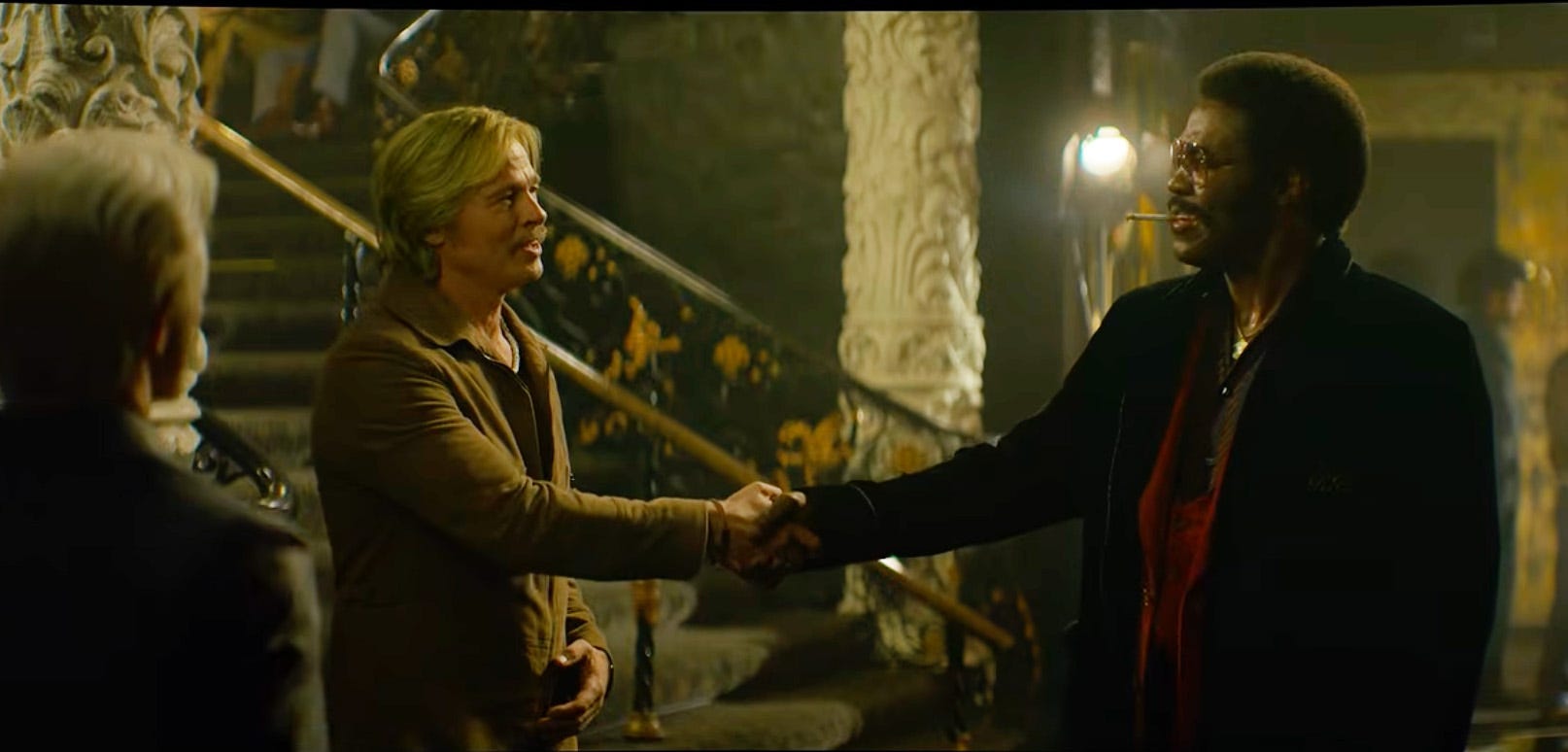
Even at 12, I knew what he meant when he said “spread your wings and let me come inside,” and we laughed about it. That was what it was like to be a kid in 1977. We had no choice but to grow up tough. We weren't coddled or even protected, and it is in this world that we find our “complete man and a common man and yet an unusual man.”
He’s not the Cliff Booth of Once Upon a Time in Hollywood—the one you might not want on a movie set and maybe wouldn’t want to marry—but no one is better suited to wander into a house in the Hollywood Hills and confront the Manson Family.
It’s hard to believe that was six years ago. But these were six hard years. To revisit Cliff Booth now would have to show that wear and tear. So why make it at all? It’s certainly not to win the Oscars; Once Upon a Time in Hollywood should have won but didn’t. You can’t fix that. It is a feature, not a bug.
It’s not for ego or money. So what’s the reason? For love of the frame. They do it out of love. And back in 1977, audiences showed up for the same reason. Because why not? Because someone had to bring the magic back, and they do, fearlessly, with the kind of breathtaking genius absent from most movies released in these past six agonizing years.
When we catch up with Cliff Booth, he’s working as a projectionist at the New Beverly Cinema and as a bartender at night. He lives with his pops, an ailing Peter Weller, and his fickle, demanding cat while watching all that television had to offer back then: old movies, Hee Haw.
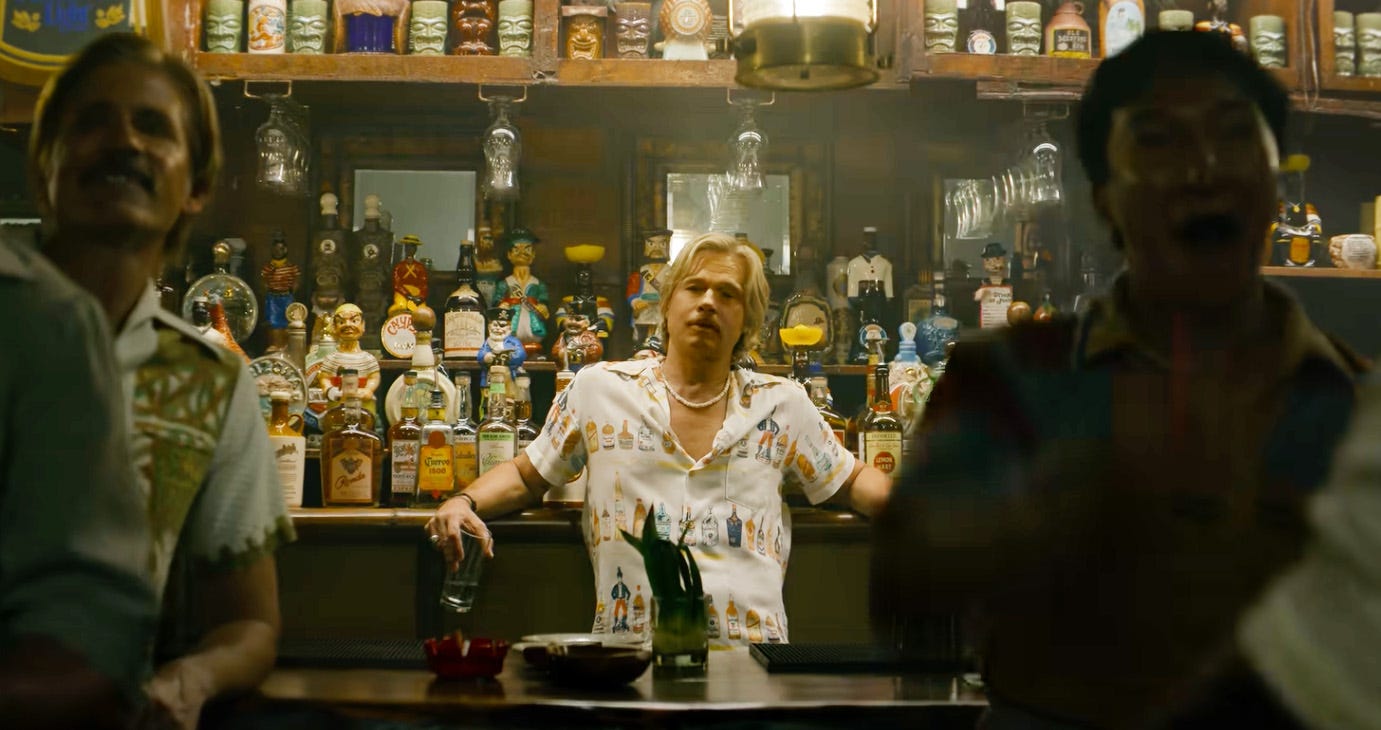
Into the malaise and blitzed, sun-soaked would-be paradise of 1977, Cliff Booth gets entangled in a film noir through surfer dudes and The Bad News Bears. But make no mistake, this movie is darker than people are probably expecting.
While it doesn’t ground out as definitively as The Departed or No Country for Old Men, we’re still going on a Hero’s Journey of sorts where the protagonist, along with this audience, does not yet know his ultimate fate. That’s not a spoiler; it’s a heads-up not to go into Cliff Booth expecting a fairy tale like Once Upon a Time in Hollywood. This is darker. Just remember the six years.
David Fincher is probably incapable of making a fairy tale. He knows humanity too well. But it is the collision of Quentin Tarantino’s desire for a satisfying ending and Fincher’s desire to make his audience a little unsettled or even uncomfortable that makes Cliff Booth easily one of the best films of the year.
In all the ways Cliff Booth brings the magic back, Brad Pitt, filling every frame, is at the top of the list. What a sublime pleasure to luxuriate in a thing absent from most Hollywood movies now: unapologetic masculinity. This has to be a sexy movie because that was 1977. To deny the lifestyle would be a lie, just as denying what a babe magnet Brad Pitt always has been and still is. Cliff Booth is the object of desire for every woman who lays eyes on him.
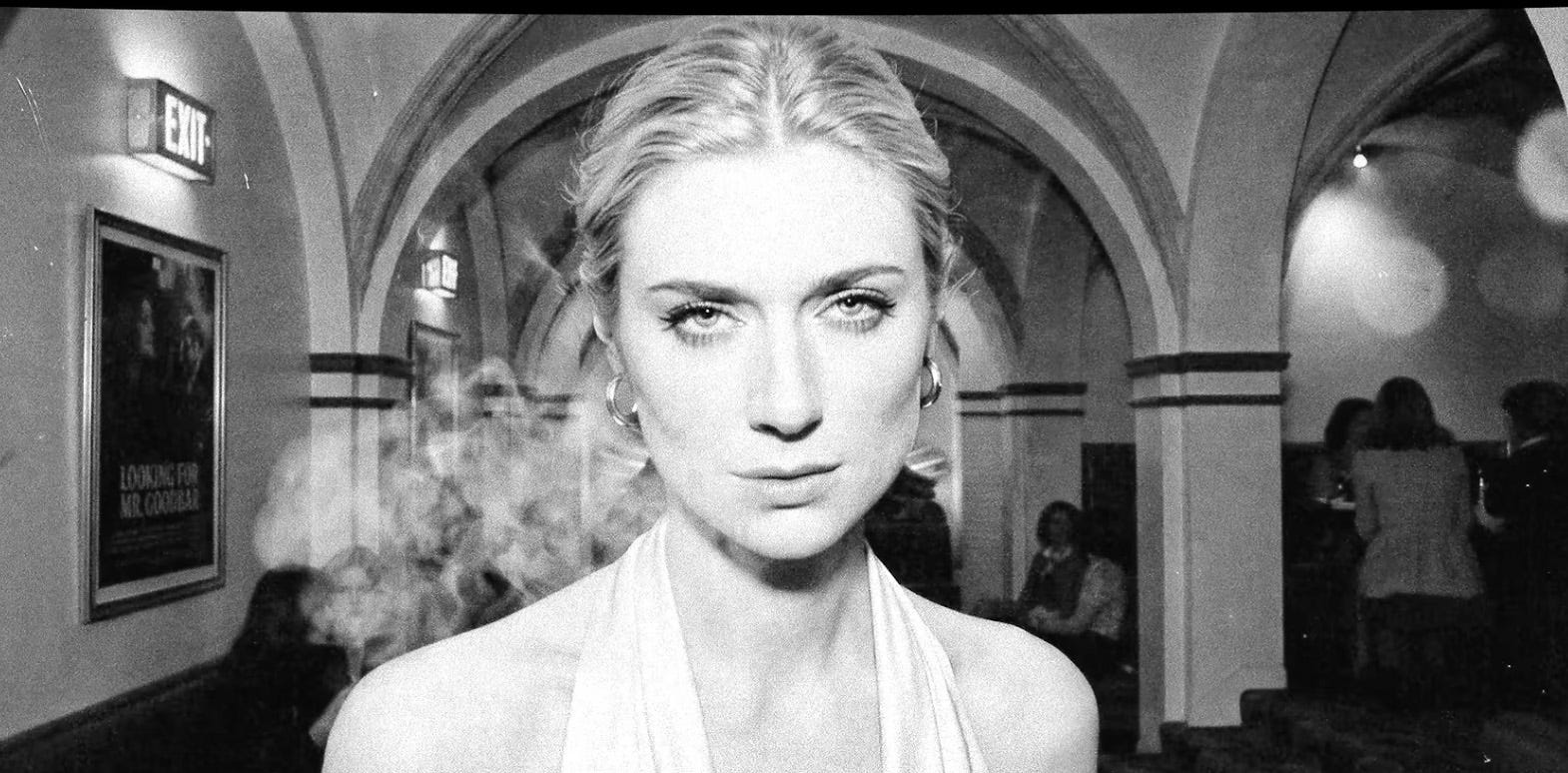
He has met his match with a cool Fincher blonde, the scene-stealing Elizabeth Debicki. She and Pitt have the kind of chemistry that recalls Bogart and Bacall, or Jessica Lange and Jack Nicholson in the Postman Always Rings Twice remake. For Cliff Booth, she is his kindred kink.
Debicki is a tall drink of water the camera loves, the kind of hot blonde also mostly absent from today’s Hollywood movies. As Karen Crosby, she hasn’t quite figured out where she fits into 1977 either, and in one sequence Fincher captures her through the lens, showing a woman out of place and out of time but still the perfect dream girl for Booth, even if eternally out of reach.
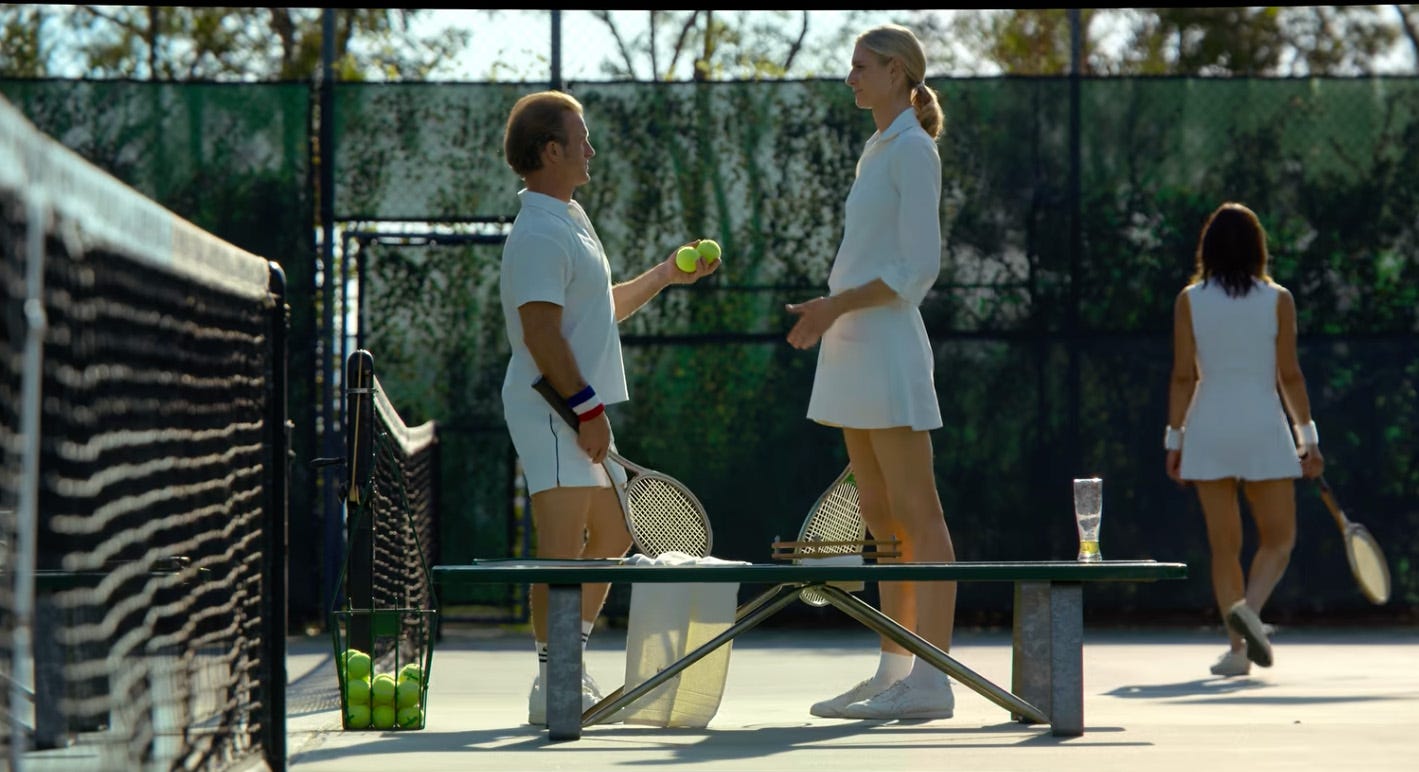
Scott Caan is especially good as the vain, overly emotional—and very short—actor boss, juxtaposed against Debicki’s cool, calm nature as she towers over him. They headline a stellar ensemble with some of the best acting of the year.
Fincher has assembled his exceptional team of artisans to help bring this odd but unforgettable vision to life: the score by Trent Reznor and Atticus Ross will be the best of the year, along with the editing by the unmatched Kirk Baxter, cinematography by Erik Messerschmidt, sound by Ren Klyce, and costumes by Trish Summerville.
There is no question that what drives this film is the desire to tell stories and make movies that has motivated both Fincher and Tarantino for decades, not that the Oscars have paid any notice to either of them. Neither has ever won Best Director or Best Picture, which puts them right alongside the best who never did, like Hitchcock and Kubrick. They are two of the most talented directors working in film today, and yet the Oscars have become an absurd machine that pushes “Oscar movies” into the race but leaves no mark. This is the kind of film that should land a nomination in every category.
Cliff Booth is a hard R, but it is also unafraid. Netflix has given Fincher enough freedom to be unafraid, and they have never released any film as good as Cliff Booth. The Odyssey has Best Picture, probably, but if Netflix ever won an Oscar for Best Picture, it would be for this. Suddenly, the whole thing makes sense—Fincher’s contribution to the streamer, their efforts to build a studio, and now a masterpiece for the ages. Don’t miss it on the big screen.
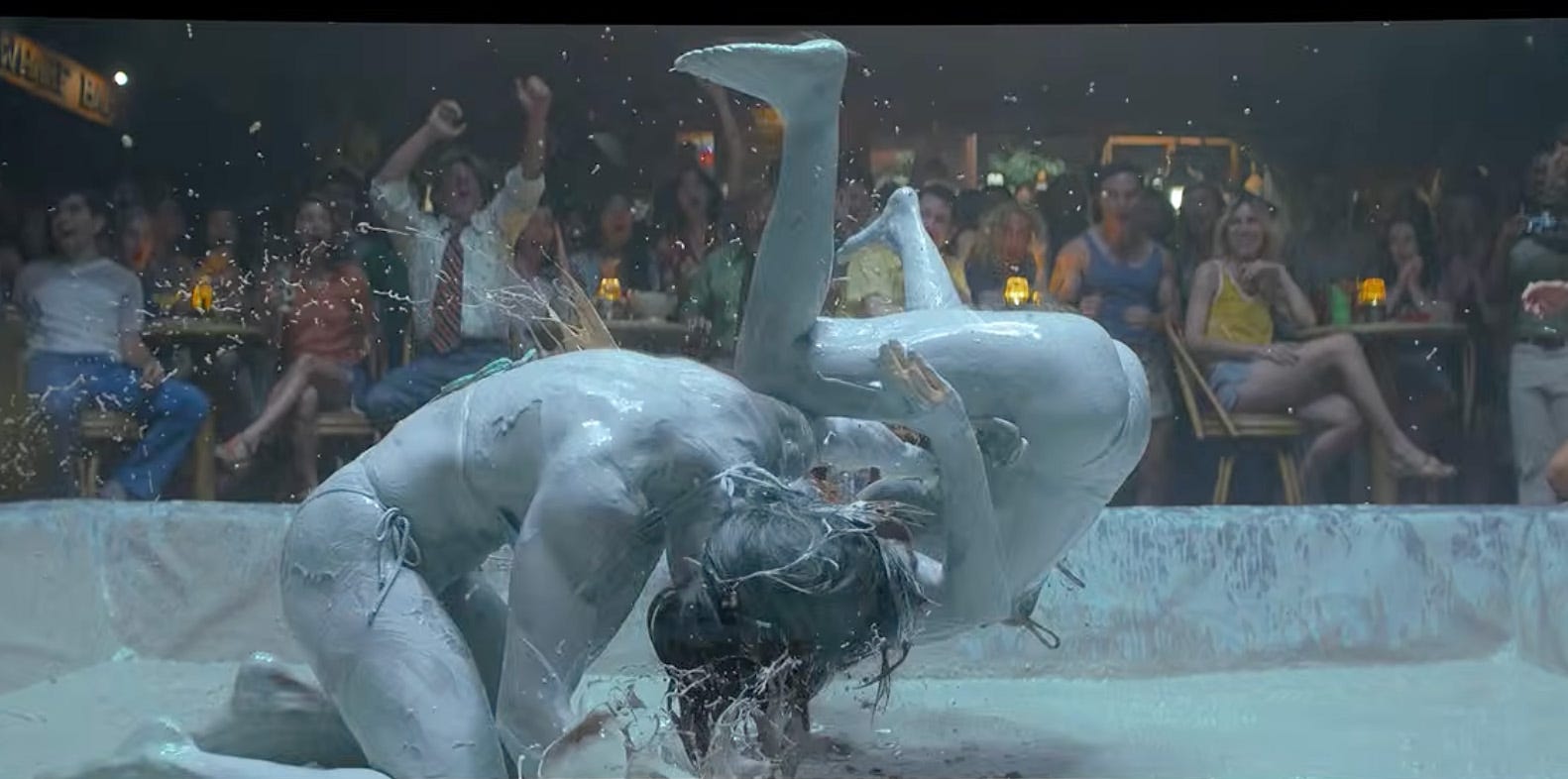
This movie isn't for everybody, especially those looking for something beyond the CINEMA of it all. It is a movie for movie fans. Not a film for sneering, self-important critics who sit there and type opinions (no better or worse than your own), and maybe not a film for people just looking to have a good time. On some level, it is disturbing. But we live in a ridiculous time full of ridiculous hot takes that discourage freedom in filmmaking—and this movie is free.
What makes Cliff Booth one of the best films of 2026 is that Fincher and Tarantino are filmmakers. They aren’t moralists. They aren’t trying to fix society or tell you what to think. They have given us time and place, complicated characters, sweet nostalgia, and unexpected, politically incorrect dialogue and action.
They have taken us to unexpected places yet again. They have made something unforgettable. They’ve brought us back to the surface, and now we can finally breathe.
Right on cue, the movie critic for the NY Post called it pointless. I’ll trust your judgement on this one!
Bravo! Please write more reviews, they are terrific!
I remember not seeing once upon a time because a grip of people I knew spoke poorly of it. Finally watched it last year, somehow not knowing about the Manson angle, loved it, and was SO mad I listened to those people and missed it in theaters. Won't happen this time!